Your gut keeps a diary. This pod tracks it.
A pod on the toilet rim photographs the bowl at each flush. It flags changes in stool form, urine color and visit timing from your baseline.
See how a visit becomes a report
From visit to report
The reports
Each visit adds to trends against your own baseline, which takes about 14 days to set. These reports track wellness and do not diagnose disease.
The report card after every visit, with example values. If red is seen in the bowl it carries a red flag and a line to see a GP.
Bathroom habits
when you go, over 14 daysMost visits after 07:00. 2 night trips (23:00 to 06:00, shaded) in 14 days.
Gut Health Score
30 days of form and regularity.
Hydration
from urine colour71 Hydration Score, example
The pod
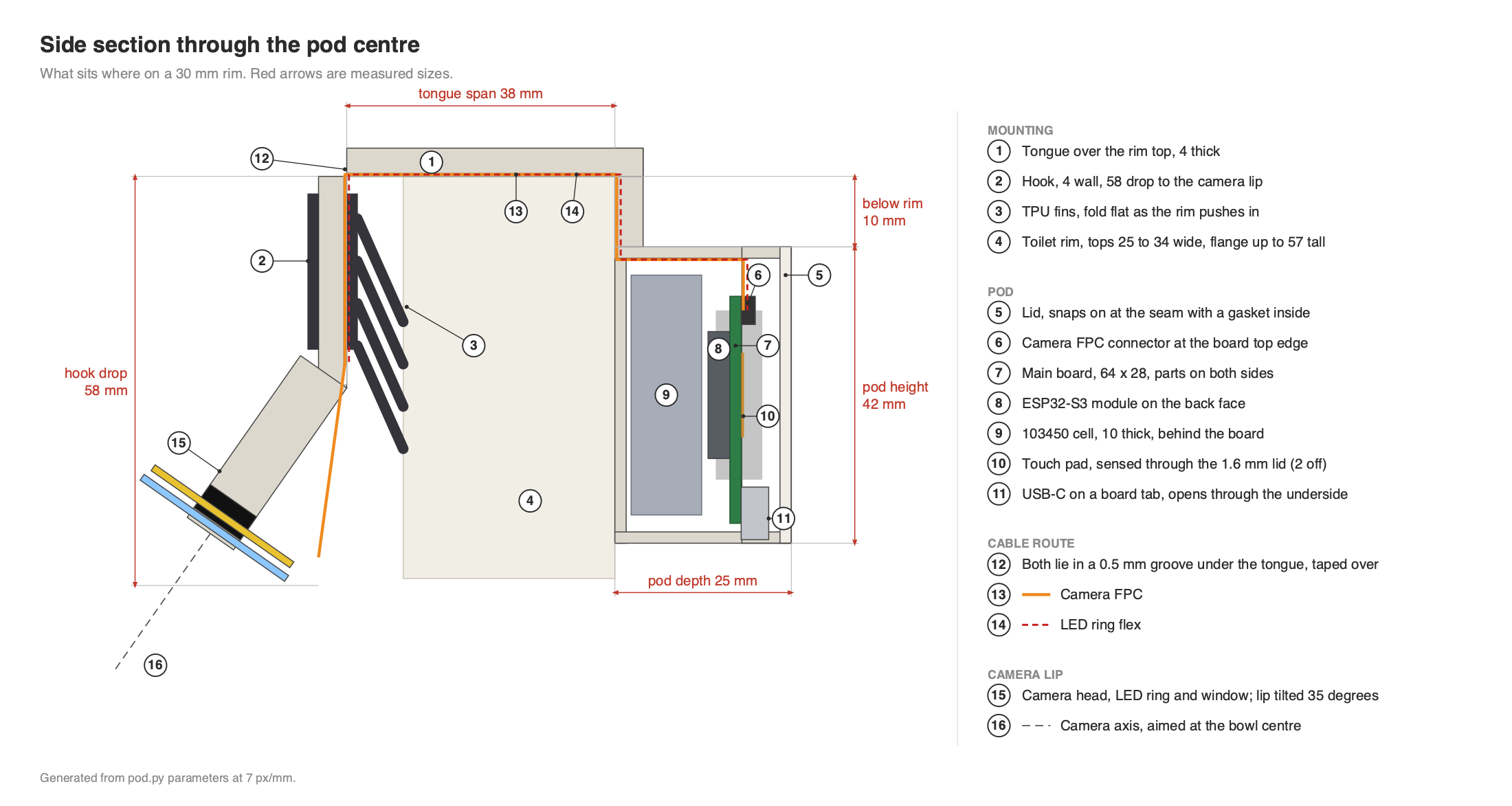
The pod hangs outside the bowl and reaches over the rim to a camera lip that tilts 35 degrees toward the water.
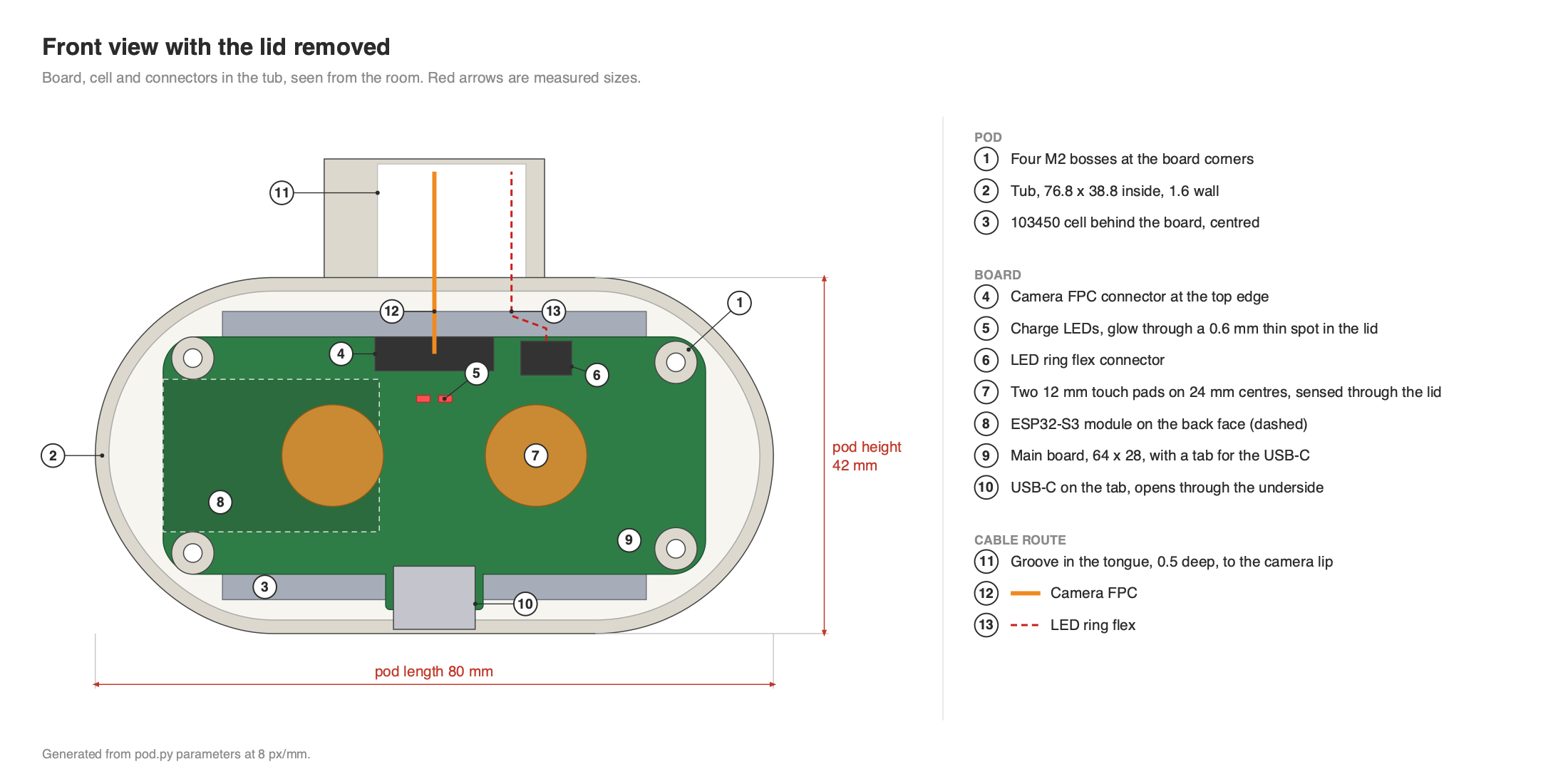
- 80 x 42 x 25 mm
- Sealed face with hidden touch pads
- 2000 mAh cell, USB-C charge in about 7 hours (estimate)
- Fits rims 25 to 34 mm wide without tools

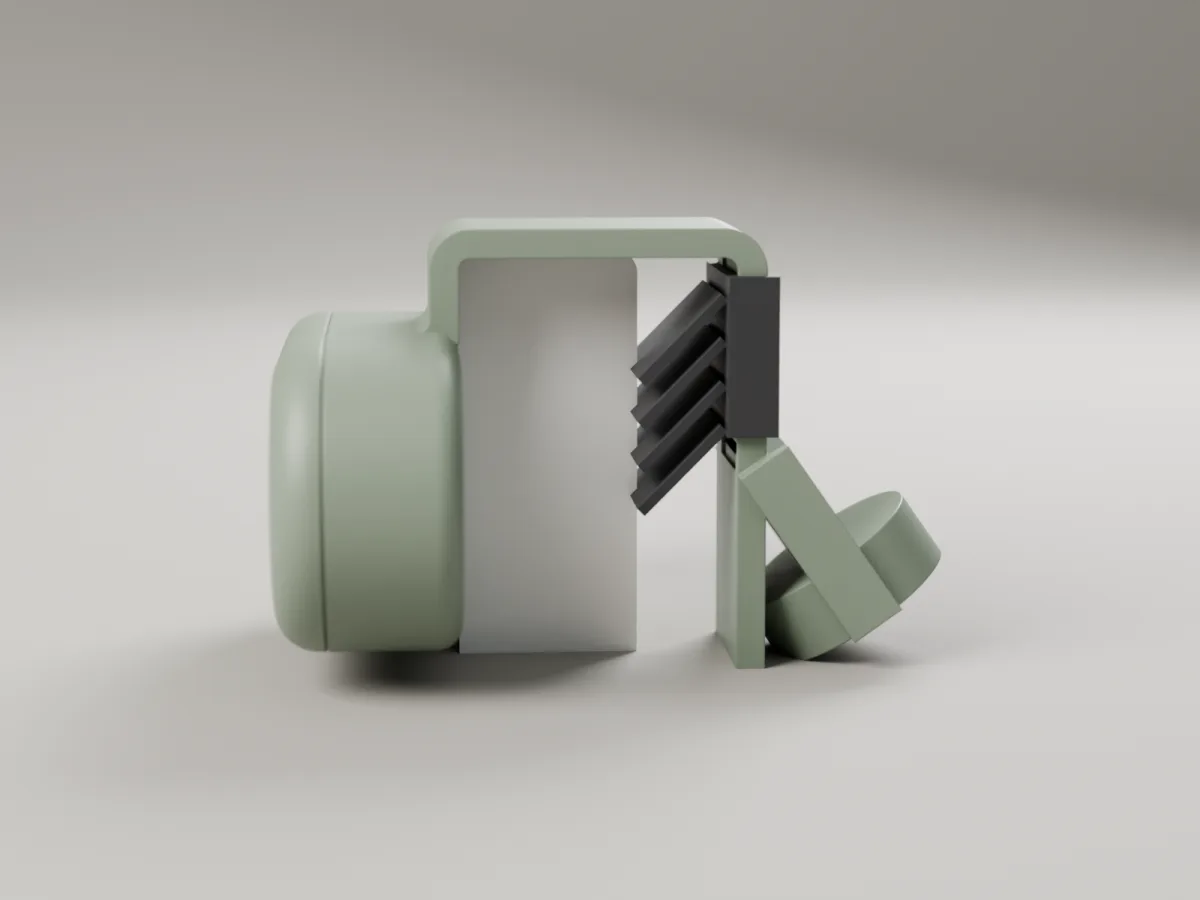
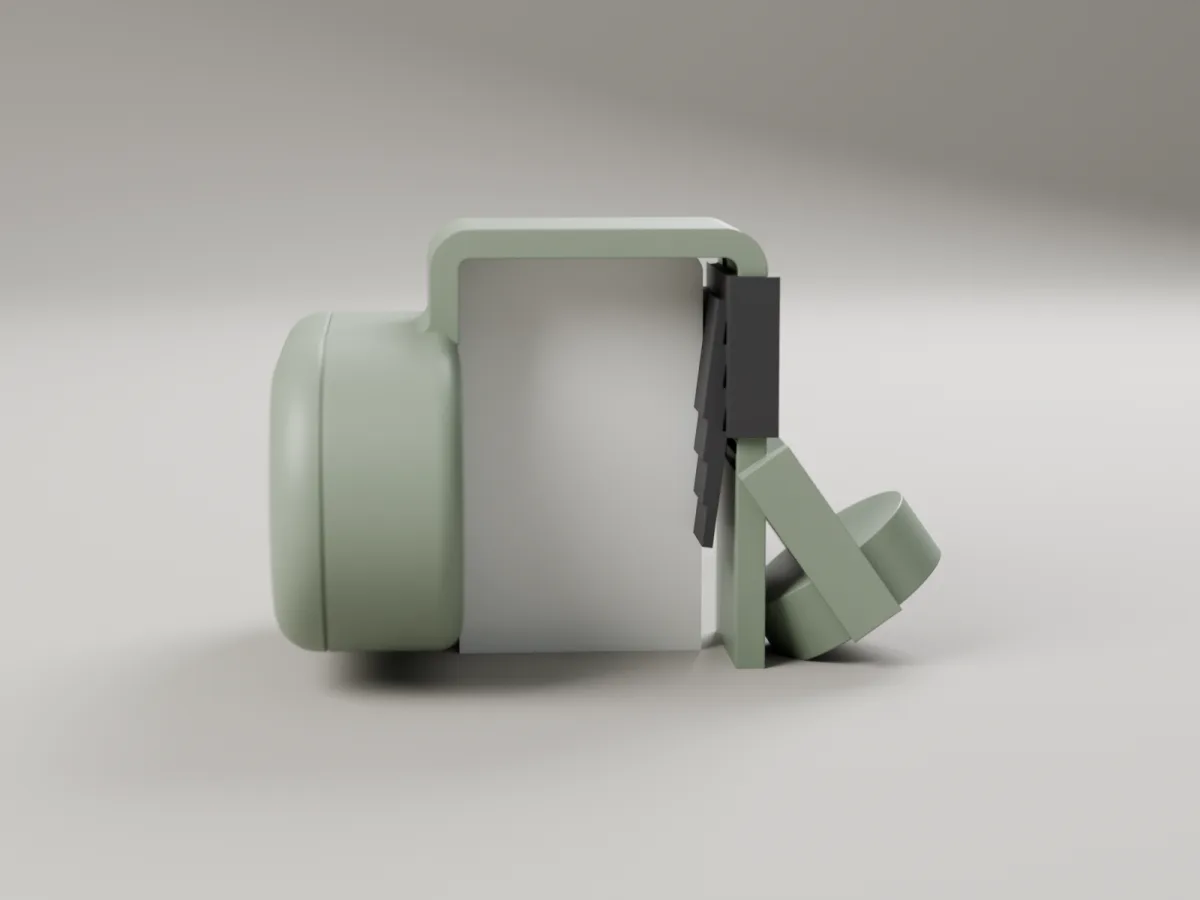
Inside the pod
Two printed shells snap together around the board and the cell.
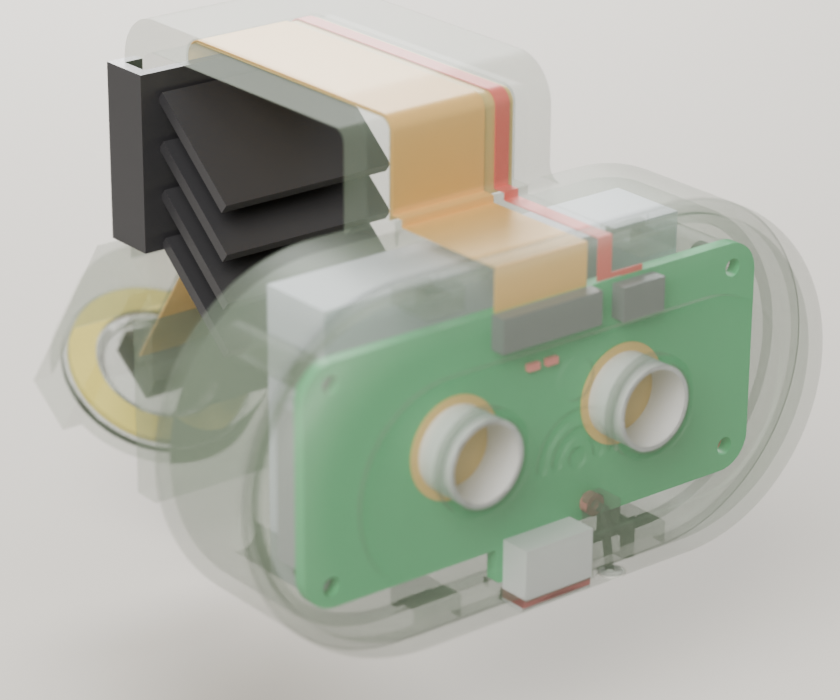
- Board
- Cell, behind the board
- Camera and LED ring
- Touch springs
- Microphone vent
- USB-C port
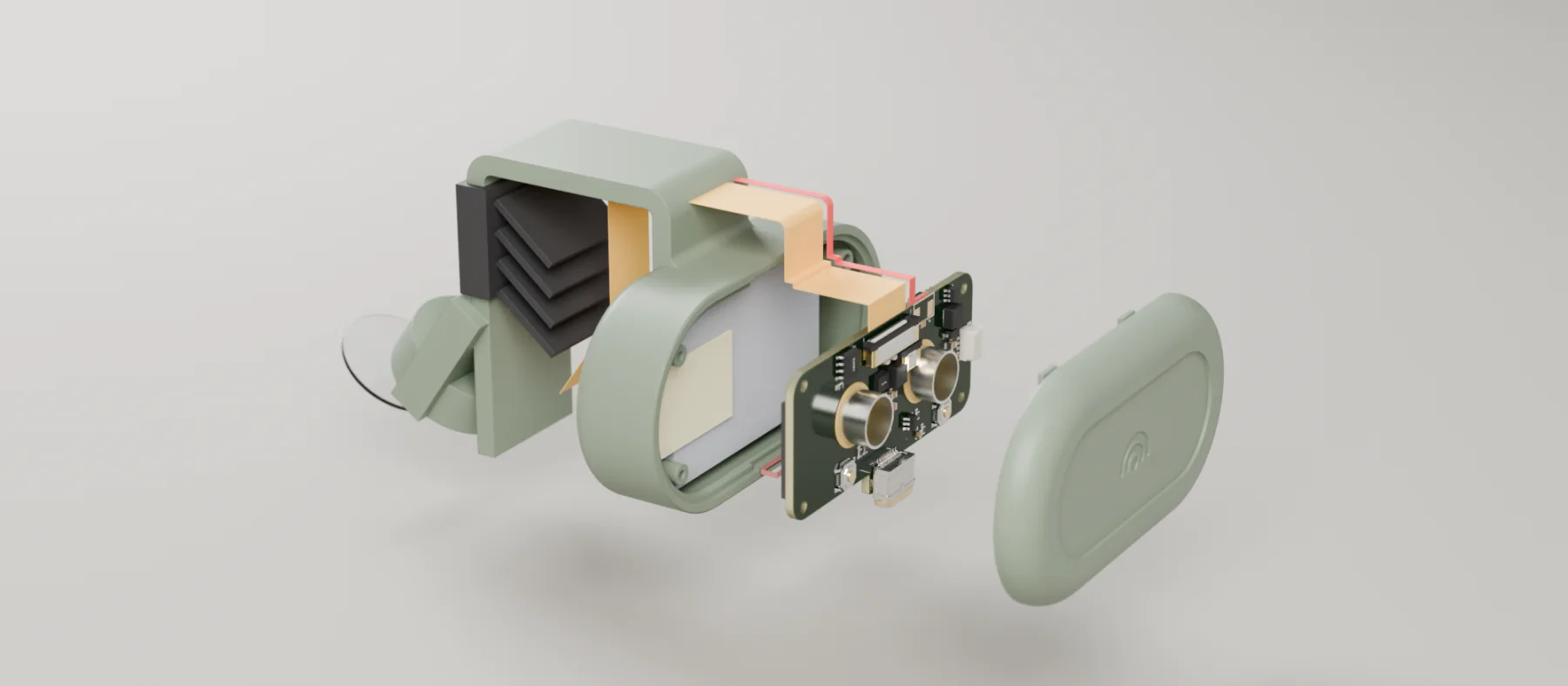

The board
A four-layer board designed for the pod.
- ESP32-S3 with Wi-Fi and Bluetooth
- 16 MB flash and 8 MB PSRAM
- OV2640 2 MP camera
- 6 high color-rendering LEDs at constant current
- 256 MB soldered storage
- 3.3 V across the 3.0 to 4.2 V cell range


Privacy is a matter of geometry
The camera sits under the rim and points at the water. The cloud is designed to delete the pictures after analysis and keep only the results as numbers.
Prototype status
Done
- Schematic complete
- Parts chosen and priced
- Housing modeled and checked on three rim widths
- Reports specified
Now
- Board placed and partly routed on the 64 by 28 mm outline
Next
- First prototype with assembled boards and a printed pod
Then
- Firmware, a labeled image set, a revision B board